Best Used Engines to Buy in 2026 | Reliable OEM Engine Guide
September 11, 2026 • Used OEM Engines
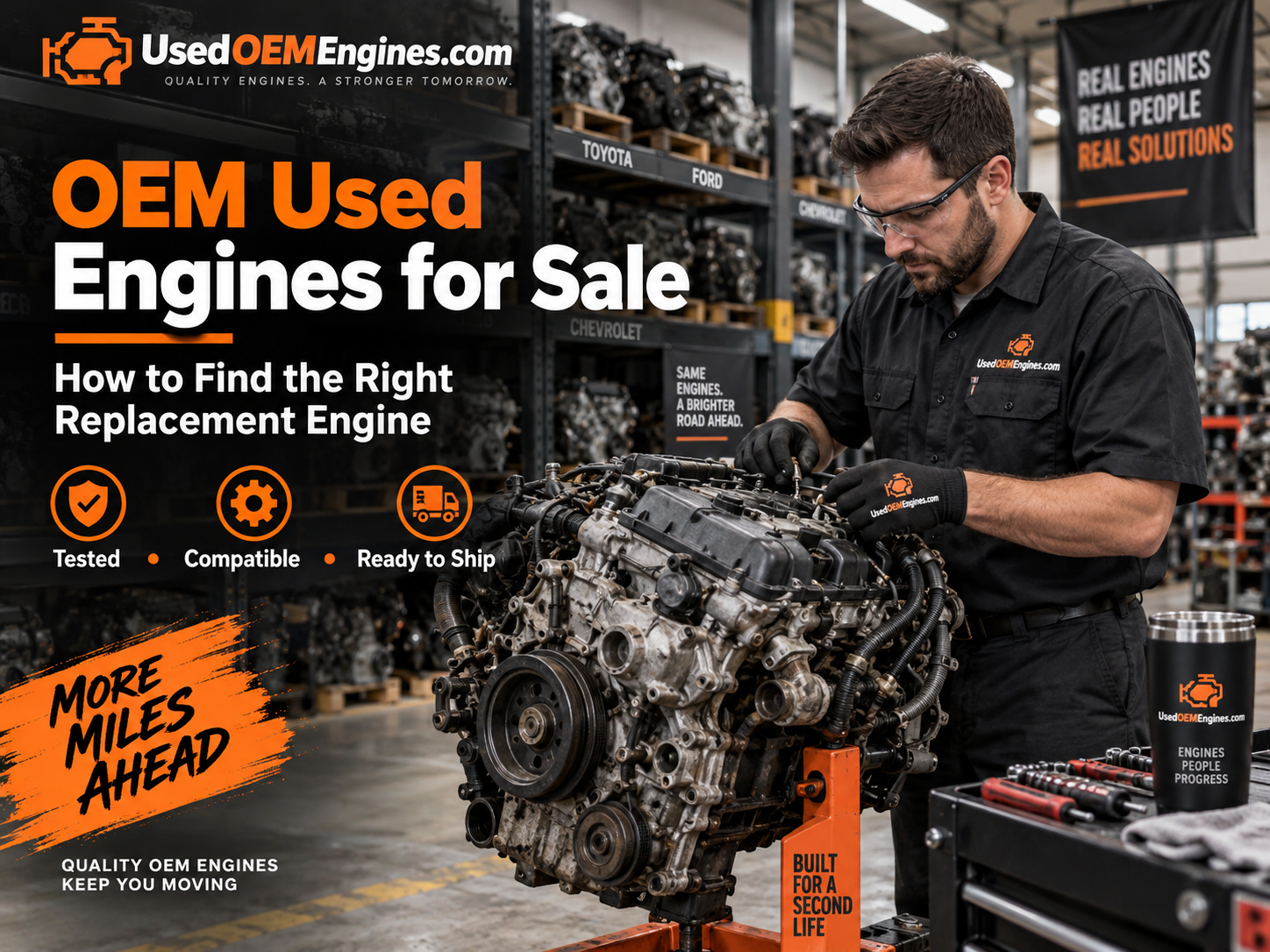
When an engine fails, most buyers do not just want the cheapest replacement. They want an engine that fits correctly, has useful life left, and does not create another expensive repair a few months later.
That is why many vehicle owners look for used OEM engines instead of unknown aftermarket replacements.
But what actually makes one used engine better than another?
The answer comes down to fitment, engine history, testing, mileage, and how the engine was handled before sale.
1. A Good Used Engine Starts With Correct Fitment
The best engine is useless if it does not fit your vehicle correctly.
Do not rely only on year, make, and model. Vehicles can have multiple engine options even within the same model year.
Important fitment details may include:
- VIN engine code
- Engine displacement
- Drivetrain
- Emissions configuration
- Turbo or non-turbo setup
- Production date
- Sensor and wiring differences
Current U.S. suppliers ranking for used-engine searches strongly emphasize VIN matching before shipment.
Before ordering, keep your 17-digit VIN ready.
2. Mileage Matters, but It Is Not Everything
A lower-mileage engine is usually attractive, but mileage should not be your only deciding factor.
An engine with 70,000 miles and poor maintenance can be worse than one with 100,000 miles that was well cared for.
When comparing engines, look at:
Mileage + Condition + Test Results + Warranty
Ask where the mileage came from and whether it was recorded from the donor vehicle.
Your own site already covers this well, so this article should use mileage as one factor rather than making it the entire topic.
3. Testing Separates Better Engines From Unknown Engines
A quality used engine should be inspected before it is shipped.
Depending on the engine and supplier, testing may include:
- Compression testing
- Oil-pressure testing
- Leak-down testing
- Visual inspection
- Checking for overheating
- Inspecting for oil or coolant contamination
Current competitors prominently feature tested and inspected inventory because this is one of the biggest trust factors for buyers.
The best used engine is not just one with low mileage. It is one with clear condition information.
4. Factory OEM Engines Can Offer Better Fit
An OEM engine was built to the original manufacturer’s specifications.
That can make it easier to maintain the vehicle’s original configuration compared with an unknown aftermarket replacement.
For many buyers, this means:
- Better fitment confidence
- Fewer compatibility surprises
- Original-style mounting points
- Factory sensor and component layout
This is one reason used OEM engines for sale remain popular with people who want to repair an older vehicle without changing its original setup.
5. Warranty Matters More Than Most Buyers Think
Even a tested used engine is still a used mechanical component.
That is why warranty coverage matters.
Before buying, check:
- Warranty length
- What internal components are covered
- Installation requirements
- Maintenance requirements
- Claim process
- Whether labor is covered
Do not assume every warranty is the same.
Current ranking sellers use warranty terms as a major trust signal, often alongside VIN verification and testing.
6. Shipping and Handling Can Affect the Engine Too
Used engines are normally shipped by freight on a pallet.
Poor handling can damage accessories, sensors, oil pans, or mounting points.
Before ordering, confirm:
- How the engine is secured
- Whether shipping is insured
- Delivery requirements
- Whether liftgate service is needed
- What to do if damage is found
Inspect the engine as soon as it arrives and take photographs before installation.
7. What Types of Used Engines Are Usually in Demand?
Demand changes by vehicle population and availability, but used engines for popular manufacturers are consistently searched because there are millions of those vehicles still on the road.
Common makes include:
- Ford
- Chevrolet
- GMC
- Toyota
- Honda
- Nissan
- Hyundai
- Kia
- Jeep
- Subaru
- BMW
- Mercedes-Benz
Popular engines may be easier to source, while rare, diesel, turbocharged, or performance engines can cost more.
So, What Is the Best Used Engine to Buy?
There is no single engine that is “best” for every buyer.
The best replacement engine is the one that:
Matches your VIN, has reasonable mileage, has been properly inspected, comes with clear warranty coverage, and fits your budget.
That is much more important than choosing an engine based only on a low advertised price.
Find the Right Used OEM Engine
If your engine has failed, a used OEM replacement can be a practical way to keep your vehicle on the road.
At UsedOEMEngines.com, buyers can search for replacement engines for cars, trucks, and SUVs.
Before requesting a quote, keep these details ready:
Year + Make + Model + Engine Size + VIN
The smartest purchase is not necessarily the cheapest engine. It is the engine that offers the best balance of fitment, condition, mileage, testing, warranty, and total value.