Used vs Rebuilt vs Remanufactured Engines: Full Comparison (2026)
June 2, 2026 • Used OEM Engines
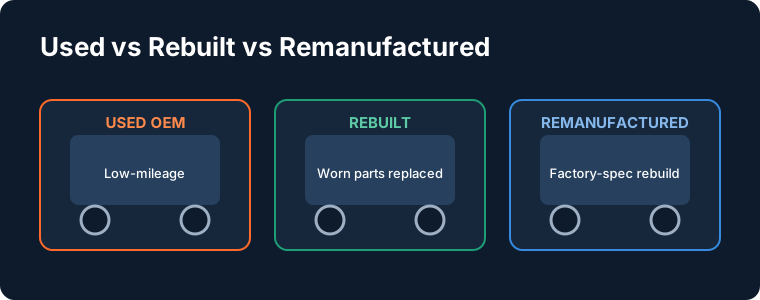
When your engine fails, you usually have three replacement options: a used OEM engine, a rebuilt engine, or a remanufactured engine. They are not the same thing. They differ in how they are produced, what they cost, how reliable they are, and the warranty you get. This guide breaks down all three so you can choose the right one for your vehicle and budget.
What is a used OEM engine?
A used OEM (Original Equipment Manufacturer) engine is a genuine factory engine removed from a low-mileage donor vehicle — for example, a car that was wrecked in a collision but whose engine was untouched. Because it is the exact engine your vehicle came with, it bolts straight in with no compatibility surprises.
It is the most affordable of the three options. When it comes from a genuinely low-mileage donor and has been compression and oil-pressure tested before sale, it is also one of the most reliable choices. The key is buying from a seller who inspects each engine and stands behind it with a warranty.
What is a rebuilt engine?
A rebuilt engine started as a worn or failed engine that was taken apart, cleaned, and had its worn components replaced to fix a specific problem. Quality depends entirely on who did the rebuild and which parts they replaced. A careful rebuild with quality parts can last for years; a rushed one can repeat the original failure.
What is a remanufactured engine?
A remanufactured engine is rebuilt to original factory specifications in a controlled facility. Components are machined back to spec, tolerances are restored, and many parts are replaced as standard. Reman engines are the most consistent and usually carry the longest warranties — but they also cost the most.
Cost comparison
As a rule of thumb, a tested used OEM engine is the lowest cost, a rebuilt engine sits in the middle, and a remanufactured engine is the most expensive. For an older or higher-mileage vehicle, the price gap often makes a used OEM engine the smartest value.
Reliability and warranty
- Used OEM: reliable when low-mileage and tested; backed by a standard warranty.
- Rebuilt: quality varies by builder; ask exactly which parts were replaced.
- Remanufactured: most consistent; longest warranty; highest price.
Which should you choose?
For most drivers keeping a vehicle a few more years, a tested low-mileage used OEM engine offers the best balance of price, factory fit, and reliability. If you are keeping a high-value vehicle for the long term and budget is not the priority, a remanufactured engine may be worth the extra cost.
Frequently asked questions
Is a used engine reliable?
Yes — a low-mileage used OEM engine that has been compression and oil-pressure tested is very reliable, because it is a genuine factory engine with proven internals. Always buy one that comes with test results and a warranty.
What lasts longer, rebuilt or used?
It depends on mileage and quality. A low-mileage used OEM engine often outlasts an average rebuild because its internals have less wear and were built to factory tolerances from the start.
Is remanufactured better than used?
A remanufactured engine is more consistent and carries a longer warranty, but it costs significantly more. For many vehicles a tested used OEM engine delivers similar reliability at a much lower price.
How do I know which engine fits my car?
Match the engine to your vehicle using your VIN and factory interchange data. This guarantees correct fit. Call us at 999-999-9999 with your VIN and we will confirm the right engine.
The bottom line
Used, rebuilt, and remanufactured engines all have their place. For the best value with a true factory fit, a tested low-mileage used OEM engine is hard to beat. Call 999-999-9999 or request a quote with your year, make, model and VIN for a guaranteed-fit price.